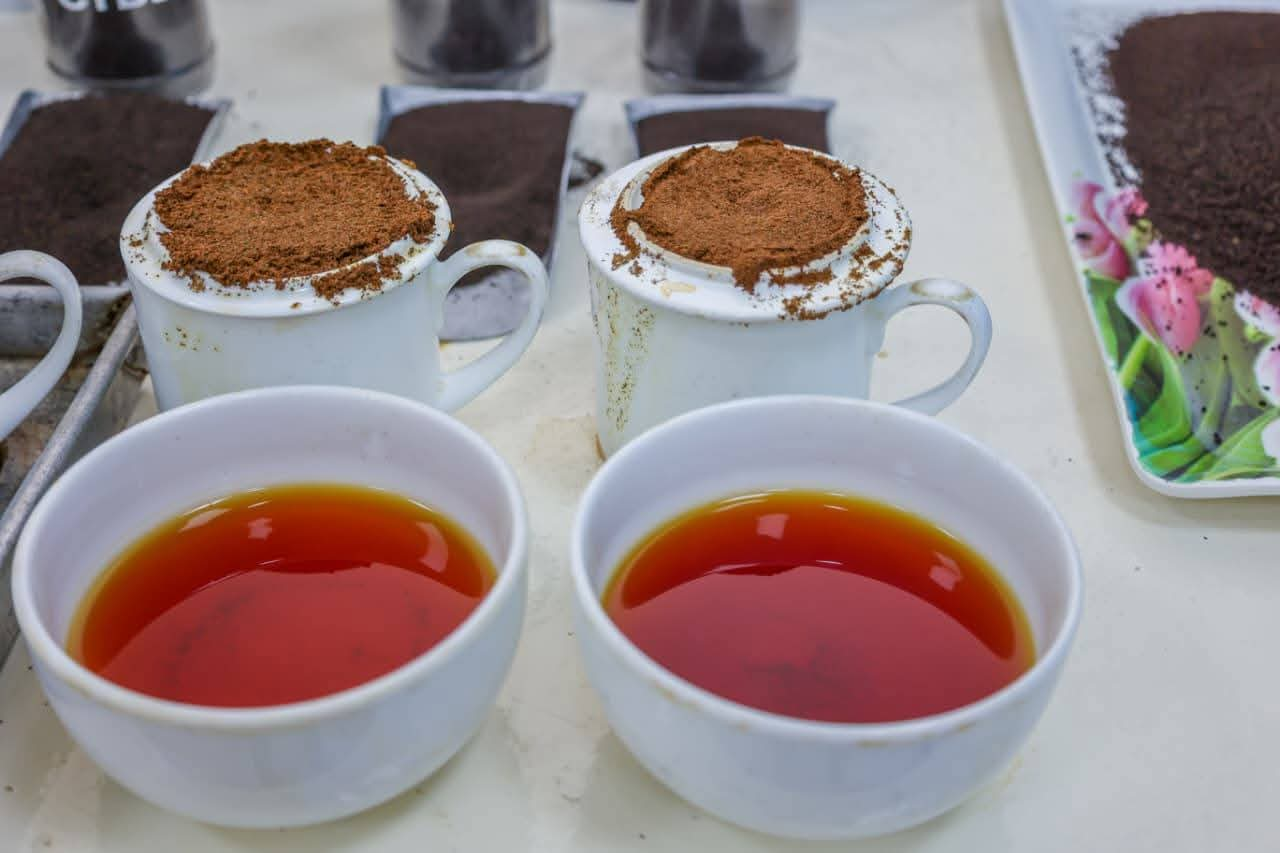
Open a Mombasa auction catalogue and you will see grades such as BP1, PF1, PD and D1. They describe the size of the tea particles — and that shapes how the tea brews.
Why particle size matters
After drying, tea is sieved into grades by particle size. Larger particles infuse more slowly; smaller ones release colour and strength faster. That is why buyers choose different grades for loose tea, tea bags and blends.
The main CTC grades
- BP1 – Broken Pekoe 1: the largest of the main CTC grades, with a bold, even granule.
- PF1 – Pekoe Fannings 1: smaller particles that brew quickly; widely used in tea bags.
- PD – Pekoe Dust: finer still, giving a fast, strong, coloury cup.
- D1 – Dust 1: the finest of the main grades, popular in markets that brew strong tea.
Grades that do not fall into these main sizes are sold as secondary grades, such as fannings and dusts.
Orthodox grades
Orthodox teas use a different set of names based on leaf style, such as OP (Orange Pekoe) for long, wiry leaf and BOP (Broken Orange Pekoe) for broken leaf.
Grade is not the same as quality
A grade tells you the size of the tea, not how good it is. Quality is judged by tasting: brokers and buyers look at the dry leaf and the infused leaf, and assess the liquor for qualities such as colour, brightness, briskness and strength. Two teas of the same grade can sell at very different prices.